Table of Contents
- Why a Routine Vehicle Maintenance Checklist Matters for Safety and Cost
- Car Maintenance Schedule by Mileage: What to Do and When
- Your Monthly and Weekly Routine Vehicle Maintenance Checklist
- DIY Vehicle Inspection Tips You Can Do in Your Driveway
- Vehicle Fluid Maintenance Intervals: Oil, Coolant, Brake, and Transmission
- EV Maintenance, Log Templates, and DIY vs. Professional Service
- Warning Signs of Neglect: When to Stop Driving and Call a Shop
- Frequently Asked Questions
Last Updated: September 27, 2026
Why a Routine Vehicle Maintenance Checklist Matters for Safety and Cost
A routine vehicle maintenance checklist is a schedule of inspections and service tasks that keeps your car safe, dependable, and cheaper to own.
Car Maintenance Schedule by Mileage: What to Do and When
Mileage is the backbone of any car maintenance schedule by mileage. Your odometer tells you when big-ticket items come due, and ignoring those intervals turns a healthy engine into a repair bill. The tiers below are a framework, your owner's manual overrides every number here.
Every 5,000 to 7,500 Miles
- Oil and filter: Change the oil and oil filter. Conventional oil typically needs the 5,000-mile end; full synthetic stretches to 7,500. If your car has an oil life monitor, follow it but never exceed 10,000 miles or 12 months.
- Tire rotation: Rotate front-to-back (or per your manual's pattern) to even out wear. Uneven wear usually points to an alignment problem, not a tire problem.
- Tire pressure and tread: Check pressure cold against the driver's door sticker. Measure tread depth with a gauge, replace at 2/32 inch, start shopping at 4/32 inch, especially before winter.
- Brake pads: Measure pad thickness. New pads run roughly 8-12 mm; replace when they hit 3 mm. Listen for a squeal tab or a grinding metal-on-metal sound.
- Engine air filter: Hold it up to a light. If you can't see through it, replace it. A clogged filter costs you fuel economy and acceleration.
Every 30,000 Miles
- Cabin and engine air filters: Replace both. The cabin filter affects your AC airflow and interior air quality, not just the engine.
- Serpentine belt and hoses: Look for glazing (shiny, cracked surface), fraying, or missing chunks. Squeeze hoses, they should feel firm, not spongy.
- Battery: Clean terminals and load-test the battery. Most last three to five years; heat shortens that, cold exposes it.
- Transmission fluid: Many manuals call for a drain-and-fill or flush around this interval. Check the fluid color, it should be reddish and translucent, not brown or burnt-smelling.
- Spark plugs and fuel system: Inspect plugs for fouling or gap wear. A rough idle or misfire code often traces back here.
Every 60,000 Miles and Beyond
- Spark plugs: Replace if not already done. Platinum and iridium plugs can stretch to 100,000 miles, but copper plugs do not.
- Coolant: Service with a flush. Coolant degrades into acidic fluid that eats water pumps, radiators, and head gaskets from the inside.
- Exhaust and suspension: Inspect for rust-through, loose heat shields, worn struts, and torn CV boots. A clunk over bumps is your first clue.
- Brake and steering fluid: Check both. Brake fluid absorbs moisture over time and should be flushed every two to three years regardless of mileage.
- Timing belt: If your engine uses a belt (not a chain), replace it on schedule. A snapped timing belt can destroy valves and turn a $600 job into a $3,000 engine repair.
The Severe-Driving Exception
Most manuals publish two schedules: normal and severe. "Severe" does not mean off-roading. It means any of these:
- Mostly short trips under 10 miles
- Stop-and-go commuting
- Extreme heat or cold
- Towing or hauling
- Dusty or salty roads
Your Monthly and Weekly Routine Vehicle Maintenance Checklist
A weekly walk-around catches small problems before they become expensive. Spend ten minutes once a week, then do a deeper check monthly.
Tire Pressure, Tread Depth, and Rotation
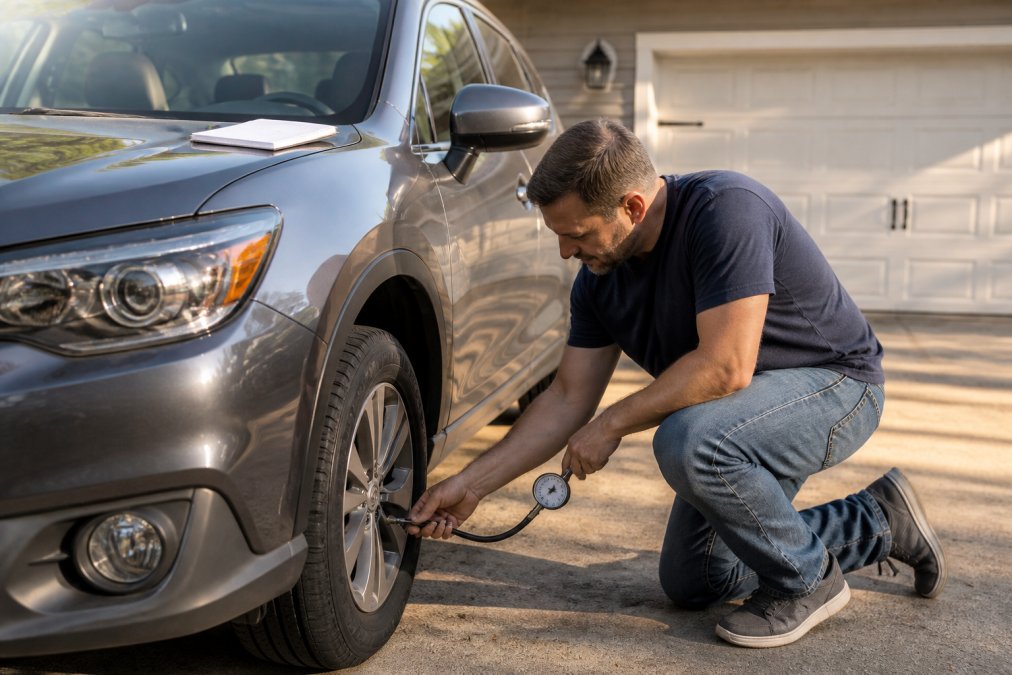
Check tire pressure cold, using the number on the driver's door sticker, not the tire sidewall. The tire pressure monitoring system light only warns when pressure drops far below safe levels, so it is no substitute for a gauge.
Battery Health and Terminal Cleaning
Look for white or blue crust on the battery terminals. That buildup blocks current and makes starting harder. Clean it with a wire brush and a baking soda paste, then rinse and dry. If the battery is over three years old, have it load-tested before winter.
Lighting, Wipers, and the Check Engine Light
Walk around the car and check headlights, brake lights, and turn signals. Replace wipers the moment they streak or chatter. If the check engine light comes on, do not ignore it: a steady light means get it checked soon, a flashing light means stop driving and call a shop.
DIY Vehicle Inspection Tips You Can Do in Your Driveway
Most DIY vehicle inspection tips take under an hour and need no special tools. A flashlight, a tire gauge, and a rag cover most of it.
- Pop the hood and check coolant, brake fluid, and steering fluid levels
- Look at the belts for glazing or fraying
- Squeeze the hoses to feel for soft spots
- Check the oil on the dipstick for color and level
- Test the parking brake on a slight incline
Vehicle Fluid Maintenance Intervals: Oil, Coolant, Brake, and Transmission
Vehicle fluid maintenance intervals vary by make, model, and driving habits, so check your manual for the exact numbers.
| Fluid | Typical Interval | Warning Sign |
|---|---|---|
| Engine oil | 5,000-7,500 miles | Dark, gritty oil |
| Coolant | 30,000-60,000 miles | Sweet smell, low level |
| Brake fluid | 2-3 years | Spongy pedal |
| Transmission fluid | 30,000-60,000 miles | Slipping gears |
| Power steering fluid | 50,000+ miles | Whining when turning |
EV Maintenance, Log Templates, and DIY vs. Professional Service
Most checklists stop at the internal combustion engine. This section covers what changes for electric vehicles, how to track your maintenance, and how to decide what to touch yourself.
EV Maintenance: What Changes and What Stays the Same
An electric vehicle deletes a chunk of the traditional checklist: no oil changes, no spark plugs, no timing belt, no exhaust system, no conventional transmission fluid. But an EV is not maintenance-free, and treating it that way surprises owners.
What EVs still need:
- Tire rotation and pressure: EVs are heavier and deliver instant torque, so tires wear faster than on a comparable gas car. Rotate every 5,000 to 7,500 miles and check pressure monthly.
- Brake inspection: Regenerative braking does most of the stopping, which means the friction brakes get used less, and can seize from lack of use. Inspect calipers and rotors annually even if pads look new.
- Cabin air filter: Same as a gas car. Replace roughly every 15,000 to 25,000 miles, or sooner in dusty areas.
- Battery thermal management coolant: Many EVs use a dedicated coolant loop to keep the battery pack in its safe temperature range. This fluid degrades over time and needs service on the manufacturer's schedule, often around 100,000 miles or every few years.
- 12-volt accessory battery: Yes, EVs have one. It runs the computers, lights, and door modules, and it fails on roughly the same three-to-five-year timeline as a gas car's battery.
- Software and firmware updates: Not a wrench task, but skipping them can affect range estimates, charging behavior, and driver-assist features.
Build a Maintenance Log That Actually Gets Used
A maintenance log is the cheapest upgrade to your ownership experience. It tells you what is due next, catches patterns (like a fluid that keeps running low), and proves to a buyer you took care of the car.
What to track for every service:
- Date and odometer reading
- What was done (and what was declined)
- Parts used, including brand and part number if you have it
- Cost and where the work was done
- Receipts or invoice photos
DIY vs. Professional Service: A Decision Framework
- Does a mistake risk your safety or someone else's? If yes, it goes to a shop. Brakes, steering, suspension, airbags, and anything involving fuel lines fall here.
- Does the job require a lift, a torque wrench you do not own, or a diagnostic scan tool? If yes, weigh the tool cost against the shop labor. A one-time job rarely justifies buying specialty tools.
- Will skipping it void a warranty or require a dealer-only reset? Some vehicles need a scan tool to reset the oil life monitor or relearn a battery after replacement. If you cannot do the reset, the DIY savings evaporate.
For fleet owners, downtime is the real cost. Advance Automotive handles fleet maintenance for local businesses, and comprehensive diagnostic capabilities including check engine light testing help us find the actual fault instead of guessing at parts.
Warning Signs of Neglect: When to Stop Driving and Call a Shop
Some warning signs mean pull over now. Others mean book an appointment this week. Knowing the difference protects your engine and your safety.
Stop driving immediately if you see:
- Grinding brakes or a brake pedal that sinks to the floor
- Smoke from under the hood or dash
- A flashing check engine light
- Overheating with steam from the radiator
Book service soon if you notice:
- A steady check engine light
- Vibrating steering wheel or pulling to one side
- Fluid leaks under the car
- A battery that cranks slowly
Frequently Asked Questions
What does routine car maintenance include?
A routine vehicle maintenance checklist covers oil and filter changes, tire pressure and rotation, brake inspection, fluid level checks for coolant, brake fluid, and power steering, air filter replacement, battery terminal cleaning, lighting checks, and wiper replacement. Following your owner's manual service interval keeps these tasks on track. Regular automotive care prevents breakdowns, protects vehicle longevity, and catches small issues before they become expensive repairs.
How often should I check my vehicle's fluid levels?
Check engine oil at every fuel stop or at least monthly. Inspect coolant, brake fluid, and power steering fluid monthly when the engine is cold. Transmission fluid and coolant flushes follow your car maintenance schedule by mileage, typically every 30,000 to 60,000 miles. Look for fluid leaks under the vehicle and note any dark or gritty fluid, which signals it is time for a change.
What is the 30-60-90 rule for car maintenance?
The 30-60-90 rule groups tasks by urgency and interval. Every 30 days, check tire pressure, fluid levels, and lighting. Every 60 days, inspect wipers, battery terminals, and air filters. Every 90 days, or roughly every 3,000 to 5,000 miles, schedule an oil change, tire rotation, and brake inspection. Treat this as a baseline and adjust to match your owner's manual and driving conditions.
Why is a routine vehicle maintenance checklist important for safety?
Brake pads, tire tread depth, and lighting all affect your ability to stop and be seen. A worn serpentine belt or low brake fluid can cause sudden failure at highway speed. Following a maintenance schedule catches these issues during a safety inspection, not on the road. Preventive maintenance also protects vehicle longevity and keeps repair costs predictable instead of emergency-driven.