

Table of Contents
- Why Auto Repair Wait Times Matter
- Understanding Average Car Repair Turnaround Time
- How to Prepare for a Mechanic Appointment
- Optimize Your Drop-Off Strategy
- Simplify Diagnostic Efficiency and Parts Procurement
- What to Do If Car Repair Is Taking Too Long
- Use Preventative Maintenance to Reduce Future Wait Times
- Communicate Proactively With Your Service Advisor
- Frequently Asked Questions
Last Updated: October 2, 2026
Why Auto Repair Wait Times Matter
Long auto repair wait times mean missed work, canceled plans, and mounting stress, or lost revenue for fleet owners. At Advance Automotive, we understand that how to reduce auto repair wait times directly impacts your life and your budget.
Many delays stem from how customers prepare for appointments, how parts are sourced, and how diagnostic work is prioritized. Understanding these factors helps you get your vehicle back faster.
This guide covers seven proven strategies to minimize your auto repair wait. You'll learn what shops need from you, how to prepare your vehicle, and what to do if repairs are taking longer than expected.
Understanding Average Car Repair Turnaround Time
Routine repairs typically take one to three business days, but diagnostics and parts ordering extend timelines significantly.
The average car repair turnaround time depends heavily on the type of work:
- Simple maintenance (oil change, tire rotation, fluid top-off): 30 minutes to 2 hours
- Brake service: 2 to 6 hours
- Engine diagnostics: 1 to 3 hours
- Parts-dependent repairs (alternator, water pump, transmission work): 1 to 5 days
Most wait time comes from idle periods between work phases, not labor. A technician might spend two hours on your vehicle, but you wait five days because parts arrived on day three and the next available slot is day five.
How to Prepare for a Mechanic Appointment
Preparation cuts wait time dramatically by helping the service advisor and technician work faster.
Document Your Vehicle's History
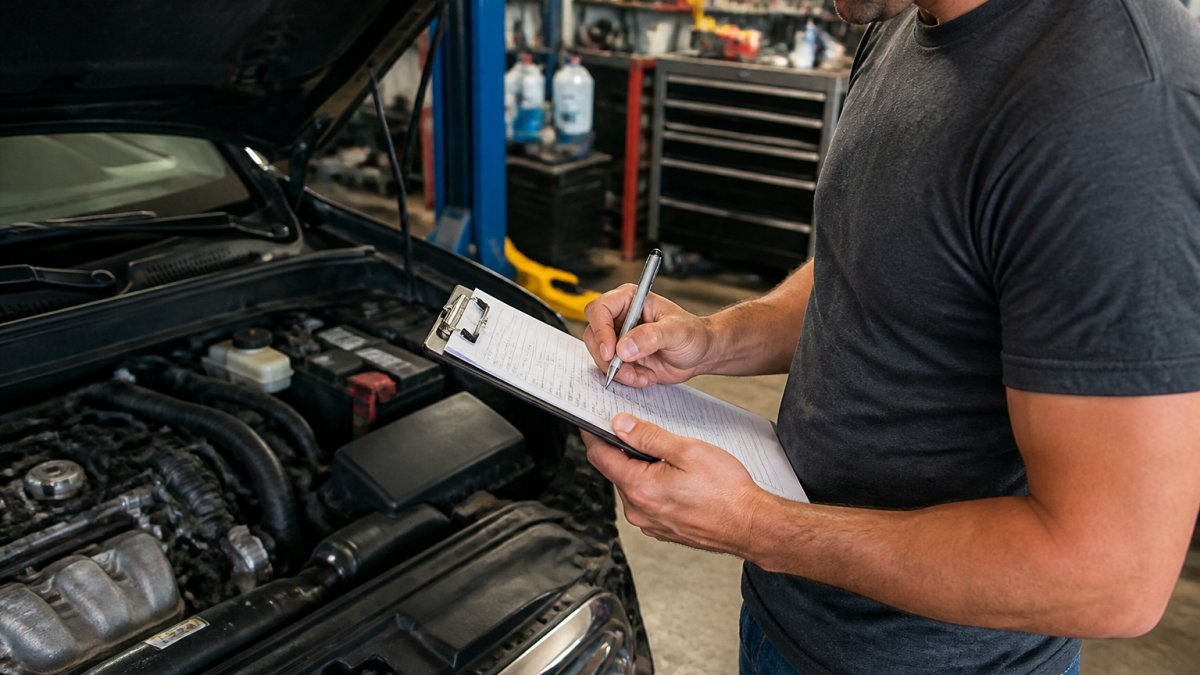
Bring your maintenance records. Write down the last service date, last oil change, and any previous repairs to the same system. This prevents redundant diagnostics and helps the technician understand what's been done already.
If you lack records, note your vehicle's make, model, year, current mileage, any warning lights or sounds, and when the problem started.
Communicate Symptoms Clearly
Describe exactly what you hear, grinding when braking, knocking during acceleration, squealing on startup, rather than vague descriptions.
Document what the symptom sounds like, when it happens, how often, and what changed recently.
Optimize Your Drop-Off Strategy
Drop off your vehicle by 8-9 a.m. to give the service center a full day of work. Afternoon drop-offs mean overnight delays before work begins.
Ask the service advisor:
- What time will diagnostics begin?
- When can you expect an initial call with findings?
- What's the estimated completion date?
- Are there parts that might need to be ordered?
Simplify Diagnostic Efficiency and Parts Procurement
Diagnostic and parts delays account for most auto repair wait time. Understanding how to prevent them helps you reduce them.
Diagnostic Strategy
Modern vehicles use computer diagnostics to identify problems quickly. A service advisor should connect your vehicle to a diagnostic scanner within the first hour, revealing what's wrong before parts are ordered.
Ask your shop:
- Do they use computer diagnostics for all engine-related issues?
- How long does the initial diagnostic take?
- Will they call with findings before ordering parts?
- Do they use a CRM or work-order system that tracks diagnostic progress in real time?
Parts Procurement and Inventory Strategy
Parts availability is the single biggest cause of extended repair timelines.
When you drop off your vehicle, ask:
- Which parts might be needed for this repair?
- Does the shop stock them, or must they be ordered?
- If ordering is necessary, what's the typical delivery window?
- What's the backup plan if the primary supplier is out of stock?
Supply Chain Contingency Planning
The difference between a one-day delay and a five-day delay often comes down to whether a shop has contingency plans in place.
When discussing your repair timeline, ask your service advisor:
- Do you have relationships with multiple suppliers for critical parts?
- Can you source parts from regional warehouses or drop-ship from alternative distributors?
- If a part is backordered, do you have a timeline for when it will be available, or can you source an equivalent part from another manufacturer?
- Do you offer loaner vehicles or shuttle service while major repairs are pending?
- Have you experienced supply chain delays on this type of repair recently, and if so, how long did they last?
What to Do If Car Repair Is Taking Too Long
If your repair is stretching beyond the original estimate, take action.
First: Verify the Reason
Second: Set a Deadline
Third: Escalate If Necessary
Use Preventative Maintenance to Reduce Future Wait Times
The best way to reduce auto repair wait times is to prevent major repairs through routine maintenance that catches small problems before they become expensive emergencies.
What Preventative Care Includes
- Oil changes every 5,000 to 7,500 miles
- Tire rotation and balance every 5,000 to 7,000 miles
- Brake inspections annually
- Air filter replacement annually or every 15,000 miles
- Fluid checks (coolant, transmission, brake fluid) quarterly
- Battery testing annually
- Suspension and steering component inspection annually
Why Maintenance Reduces Wait Time
Vehicles on regular maintenance schedules develop fewer surprise problems and avoid the emergency queue where failed components wait for parts and technician availability.
Building a Maintenance Schedule and Documentation System
To maximize the benefit of preventative maintenance, create a system that keeps you and your shop aligned.
Track Your Maintenance History
Maintain a digital or paper record of:
- Service dates and mileage
- Work performed (oil change, tire rotation, inspection findings)
- Parts replaced
- Technician notes about upcoming maintenance needs
Schedule Maintenance During Off-Peak Times
When scheduling routine maintenance, ask your service advisor:
- What days and times are least busy?
- Can you schedule your next maintenance appointment before you leave after this visit?
- Does the shop offer early-bird or off-peak discounts for maintenance scheduled during slower periods?
Prepare Documentation for Faster Intake
When you arrive for a scheduled maintenance appointment, bring:
- Your maintenance record or service history
- Your vehicle's current mileage
- Any observations about performance changes since your last service
- A list of any warning lights or minor concerns
The Long-Term Benefit: Fewer Emergency Repairs
Emergency repairs, a failed alternator, a broken serpentine belt, a transmission leak discovered mid-drive, create the longest wait times because they're unscheduled, they often require parts ordering, and they compete with other emergency vehicles for technician time.
Communicate Proactively With Your Service Advisor
Your service advisor is your ally in reducing wait time. Clear communication throughout the repair process prevents surprises and keeps work moving.
At Drop-Off
- Confirm your contact number
- Confirm the best time to call with updates
- Discuss what happens if additional problems are found
- Set expectations about when you'll hear back
During Repair
- Don't wait passively. Call if you haven't heard within the estimated timeframe.
- Ask for specific updates: "Are diagnostics complete?" "Have parts arrived?" "When will work start?"
- If additional repairs are recommended, ask questions before approving them
At Pickup
- Ask for a detailed invoice explaining what was done
- Ask about any preventative maintenance the technician recommends
- Ask when your next service should be scheduled
| Strategy | Key Action | Expected Benefit |
|---|---|---|
| Early drop-off | Arrive by 8-9 a.m. | Full day of work instead of overnight delay |
| Document history | Bring maintenance records | Faster diagnostics, no redundant testing |
| Clear symptom description | Write specific details about the problem | Technician spends less time investigating |
| Ask about parts upfront | Confirm parts availability at drop-off | No surprise delays after diagnosis |
| Preventative maintenance | Follow recommended service schedule | Fewer emergency repairs and shorter timelines |
| Communicate proactively | Call for updates during repair | Stay informed and catch delays early |
| Set deadlines | Get specific completion date | Accountability and faster escalation if needed |
Frequently Asked Questions
What is the average car repair turnaround time?
Most automotive repairs take 1-3 days, though this varies by issue complexity and parts availability. Simple services like oil changes take 30 minutes to an hour. Diagnostic work typically requires a few hours. Major repairs requiring parts procurement can extend to a week or longer. Your service advisor can provide a specific estimate after the initial diagnostic. Communicating your timeline upfront helps the shop prioritize your vehicle appropriately.
How can I prepare my vehicle to help the mechanic work faster?
Document any symptoms you've noticed (noises, warning lights, performance changes) and when they started. Gather maintenance records showing past service history. Clear personal items from your vehicle and trunk. Provide clear keys and access instructions. If you have a specific concern, write it down to share with your service advisor. This preparation reduces diagnostic time and helps technicians focus on the actual problem rather than searching for information or investigating unrelated issues.
What should I do if my car repair is taking too long?
Contact your service advisor immediately for a status update. Ask for a revised completion estimate and whether any parts delays or unexpected issues have surfaced. Request daily updates if the repair extends beyond the original timeline. If the delay seems unreasonable, ask whether a different technician or expedited parts ordering could help. Document all communications. If the shop cannot meet a reasonable deadline or won't explain the delay, you may need to seek service elsewhere, but first give them the opportunity to resolve it directly.
What's the best time to drop off my vehicle for faster service?
Early morning drop-offs (7-8 AM) typically result in faster turnaround because technicians start fresh and can prioritize your vehicle before the day's backlog builds. Weekday mornings are generally quieter than afternoons or weekends. Avoid dropping off late in the day unless the repair is urgent, as your vehicle may not be started until the following morning. Call ahead to confirm the shop's capacity and ask whether scheduling an appointment in advance improves your wait time compared to walk-in service.