Table of Contents
- Why Fast Fleet Maintenance Matters for Small Business Operations
- Key Features of Effective Fleet Maintenance Systems
- Fleet Maintenance Checklist for Small Business
- Preventative Maintenance Schedule for Commercial Vehicles
- Reducing Fleet Operational Costs Through Smart Maintenance
- DIY vs. Professional Fleet Maintenance: Cost and Compliance Analysis
- Integration with Accounting Systems and Regulatory Compliance
- Getting Started with Fast Fleet Maintenance
- Frequently Asked Questions
Last Updated: October 1, 2026
Why Fast Fleet Maintenance Matters for Small Business Operations
Small business owners running commercial vehicle fleets face a constant tension: keep vehicles on the road generating revenue, or take them offline for maintenance and lose income. This is where fast fleet maintenance for small business becomes critical to operational survival.
When a vehicle breaks down unexpectedly, the impact cascades: disrupted client schedules, damaged reputation, and scrambled backup transportation. One day of downtime often costs more than a month of preventive maintenance, yet many small business owners still operate reactively.
Preventive maintenance reduces emergency repairs by catching problems early, extends vehicle lifespan, improves fuel efficiency, and keeps your fleet reliable. At Advance Automotive, we help small business owners in Bloomingdale and surrounding areas with their fleet operations.
Fast fleet maintenance for small business means having a clear maintenance schedule, knowing which tasks to prioritize, and choosing service providers who understand small business constraints. This guide provides the framework to build a maintenance system that keeps your vehicles running.
Key Features of Effective Fleet Maintenance Systems
An effective fleet maintenance system prevents unexpected breakdowns, tracks vehicle health in real time, and documents every service for compliance and resale value. The best systems are simple enough for small teams to execute but comprehensive enough to catch problems before they become emergencies.
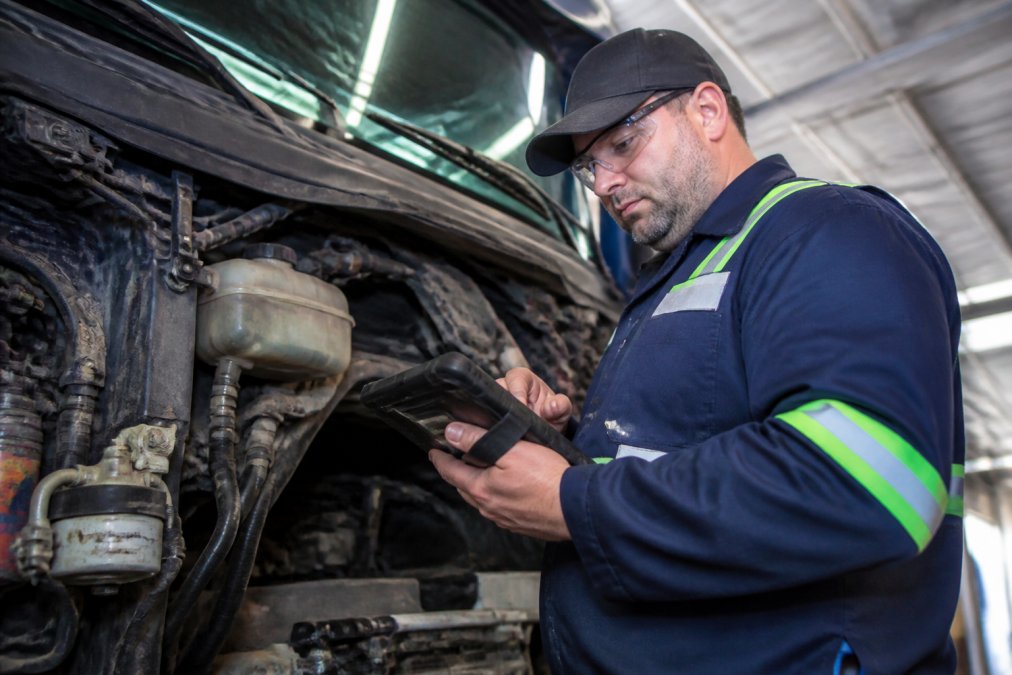
Core features include maintenance scheduling adapted to your vehicles and driving patterns, work order management tracking completed and pending tasks, real-time alerts for due maintenance, and digital inspection capabilities for quick documentation.
Asset tracking prevents missed maintenance windows and reveals patterns like one vehicle consistently burning oil or another needing frequent brake work. Cost per mile calculations become possible when tracking fuel usage, maintenance expenses, and downtime.
Integration with your accounting system provides accurate profitability data by vehicle, showing which vehicles are profitable to keep versus which should be replaced.
Fleet Maintenance Checklist for Small Business
A practical checklist ensures nothing gets missed and tasks happen in the right sequence, tied to mileage intervals and calendar dates, whichever comes first.
Monthly or every 1,000 miles:
- Check all fluid levels (oil, coolant, brake fluid, power steering fluid)
- Inspect tire pressure and condition
- Test all lights (headlights, brake lights, turn signals)
- Check windshield wipers and washer fluid
- Listen for unusual sounds during operation
Every 3,000-5,000 miles or quarterly:
- Oil and oil filter change
- Rotate tires
- Inspect brake pads and rotors
- Check battery condition and connections
- Examine hoses and belts for cracks or wear
Every 10,000-15,000 miles or semi-annually:
- Inspect suspension components
- Check alignment if vehicle pulls to one side
- Test air conditioning system performance
- Examine undercarriage for rust or damage
- Review service records for any emerging patterns
Annually or every 30,000 miles:
- Comprehensive brake system inspection
- Transmission fluid check and condition assessment
- Coolant system flush if recommended by manufacturer
- Wheel bearing inspection
- Full lighting system test
Every 2-3 years or 60,000 miles:
- Transmission service if applicable
- Differential fluid service
- Fuel system cleaning
- Comprehensive electrical system diagnostics
Assign one person to own fleet maintenance oversight: tracking what's due, scheduling appointments, and reviewing completed work.
Preventative Maintenance Schedule for Commercial Vehicles
The preventative maintenance schedule for commercial vehicles differs from personal vehicles because commercial equipment runs harder and longer. Your schedule should reflect your specific usage patterns.
Start with manufacturer recommendations, but adjust for your conditions. Vehicles in dusty environments, towing heavy loads, or in extreme temperatures need more frequent service. City delivery vehicles need different timing than highway trucks.
Document driving patterns for 30 days: average daily miles, load weight, driving conditions, and environmental factors. This reveals whether to follow manufacturer intervals or adopt more aggressive preventive maintenance.
Create a rolling calendar showing what each vehicle needs and when. Spreading service across the month prevents multiple vehicles being down simultaneously.
Include tasks beyond standard schedules: brake system flush every two years, transmission cooler inspection, differential service, comprehensive electrical diagnostics, and fuel system cleaning.
Track how long each service takes to budget service time accurately and identify unexpected issues.
Reducing Fleet Operational Costs Through Smart Maintenance
Reducing fleet operational costs isn't about cutting corners on maintenance, it's about being strategic about what you maintain, when, and how. The biggest cost reductions come from preventing catastrophic failures, not from skipping routine service.
Fuel efficiency improvements alone can reduce operational costs significantly. A vehicle with dirty fuel injectors, a clogged air filter, or misaligned wheels burns more fuel. Regular maintenance that addresses these issues directly improves your bottom line. Tire pressure alone affects fuel economy, under-inflated tires increase fuel consumption measurably.
Driver behavior impacts costs, too.
Inventory management for common parts reduces emergency repair costs.
DIY vs. Professional Fleet Maintenance: Cost and Compliance Analysis
Small business owners often wonder whether they should handle routine maintenance themselves or outsource it entirely. The answer depends on your technical skill, available time, and compliance requirements.
Integration with Accounting Systems and Regulatory Compliance
Fleet maintenance costs must flow into your accounting system accurately to give you real profitability data. When maintenance is tracked separately from vehicle operations, you can't see which vehicles are actually profitable.
- Vehicle Inspection Reports: Commercial drivers must complete pre-trip and post-trip inspections documenting vehicle condition
- Maintenance Documentation: Records showing what maintenance was performed, when, and by whom
- Service Intervals: Compliance with manufacturer and regulatory maintenance schedules
- Driver Qualifications: Documentation that drivers are qualified to operate the vehicles assigned to them
- Hours of Service: Tracking that drivers comply with federal limits on driving hours
Getting Started with Fast Fleet Maintenance
Starting a fast fleet maintenance program requires three steps: assess your current situation, establish a maintenance schedule, and choose a service partner.
Step 1: Assess Your Current Fleet
Step 2: Establish Your Maintenance Schedule
Step 3: Choose Your Service Partner
Look for providers who offer:
- Fast turnaround on routine maintenance
- Honest assessment of what actually needs repair
- Complete documentation for compliance and accounting
- Flexible scheduling that minimizes your downtime
- Diagnostic capabilities to identify problems accurately
Frequently Asked Questions
How can small businesses reduce fleet downtime and maintenance delays?
Small businesses reduce downtime by scheduling preventive maintenance during off-peak hours, maintaining a prioritized work order system, and using real-time vehicle monitoring to catch issues early. Partnering with a service provider that offers flexible scheduling, including early morning or evening appointments, minimizes disruption. Tracking vehicle health data helps identify problems before they cause breakdowns, keeping your fleet operational and your delivery or service schedules on track.
What should be included in a fleet maintenance checklist for small business?
A comprehensive fleet maintenance checklist includes fluid levels (oil, coolant, brake fluid), tire condition and pressure, brake pad wear, battery health, lighting systems, wipers, suspension components, and air filter condition. Document service history, note any warning lights or unusual sounds, and schedule oil changes, filter replacements, and inspections based on manufacturer intervals. Regular driver vehicle inspection reports (DVIRs) catch minor issues before they become expensive repairs.
What is the difference between preventive and reactive fleet maintenance?
Preventive maintenance follows a schedule, replacing fluids, filters, and worn parts before failure occurs. Reactive maintenance waits until something breaks. Preventive maintenance reduces total cost of ownership by avoiding emergency repairs, unexpected downtime, and safety risks. For small business fleets, preventive maintenance is far more cost-effective. It also improves driver safety and helps you meet regulatory compliance standards.
How does fleet maintenance software help small businesses manage vehicles?
Fleet maintenance software automates work order management, tracks service history, schedules preventive maintenance, monitors fuel efficiency, and generates compliance reports. It provides real-time visibility into vehicle health and mechanical issues through telematics data. This data-driven approach helps you optimize fleet utilization, reduce cost per mile, and ensure all vehicles meet regulatory standards. Most systems integrate with accounting software to track maintenance expenses against revenue.
What regulatory compliance requirements apply to commercial vehicle fleets?
Commercial fleets must comply with FMCSA regulations, including regular vehicle inspections, maintenance documentation, and driver vehicle inspection reports (DVIRs). Vehicles must pass DOT inspections covering brakes, lights, tires, and safety equipment. Depending on your industry, you may also need to track hours of service, hazmat compliance, or specialized equipment inspections. Maintaining detailed repair logs and service records is essential for proving compliance during audits.
How much does fast fleet maintenance typically cost for a small business?
Maintenance costs depend on fleet size, vehicle type, age, and condition. Rather than estimating, contact a local service provider for a maintenance plan quote tailored to your vehicles and schedule. A professional can review your fleet, recommend a preventive maintenance schedule, and provide transparent pricing. This approach ensures you're budgeting accurately and not overpaying for unnecessary services.
Can you service vehicles from outlying areas, or do you only work on local fleets?
Advance Automotive serves the broader region including Bloomingdale and surrounding areas. If you're located in Richmond Hill, Rincon, Pooler, or near US-80, contact us directly to confirm service availability for your fleet. We work with businesses across the region to provide reliable maintenance and repairs that keep your vehicles on the road.
Fast fleet maintenance for small business isn't complicated once you have a system in place. The businesses that struggle are the ones operating without a plan, reacting to breakdowns instead of preventing them. Advance Automotive specializes in exactly this: helping small business owners establish maintenance routines that keep vehicles safe and dependable while controlling costs. Schedule service with us today and let's build a maintenance strategy that works for your specific fleet.